
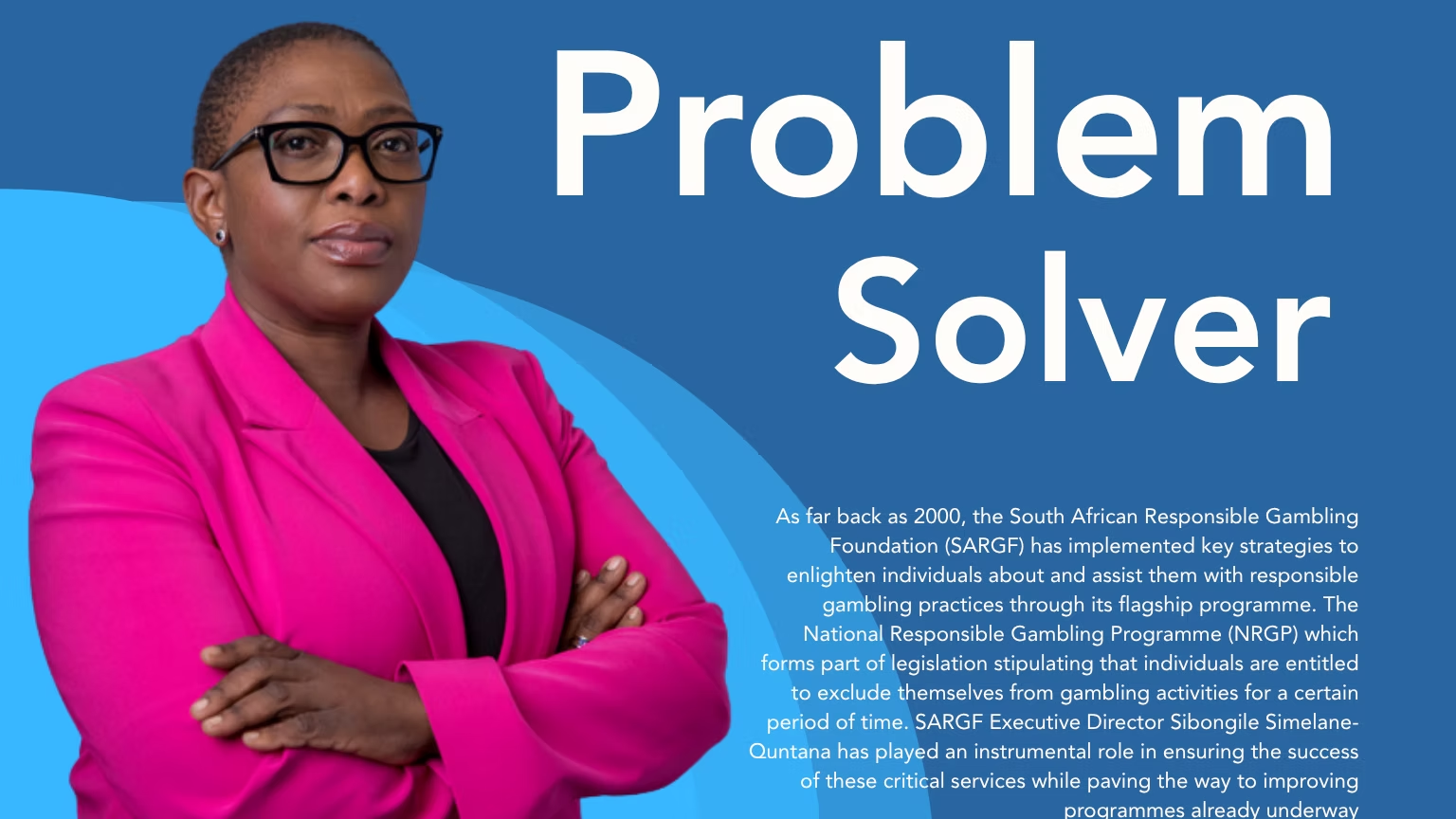
As far back as 2000, the South African Responsible Gambling Foundation (SARGF) has implemented key strategies to enlighten individuals about and assist them with responsible gambling practices through its flagship programme. The National Responsible Gambling Programme (NRGP) which forms part of legislation stipulating that individuals are entitled to exclude themselves from gambling activities for a certain period of time. SARGF Executive Director Sibongile Simelane-Quntana has played an instrumental role in ensuring the success of these critical services while paving the way to improving programmes already underway
SUCCESS THROUGH SUPPORT
Counselling for individuals is at the core of the SARGF’s self-exclusion programme, but in order to receive such help, the onus is on the individual to realise that intervention in their gambling practices is necessary. ‘The programme is geared towards people who recognise that they have a problem, and that is very important,’ Simelane-Quntana says. ‘The individual will realise that they are no longer gambling for social reasons, but they are rather heading towards becoming addicted.’ The whole notion surrounding the self-exclusion programme is for individuals to join before their problem turns into an addictive habit ‘When you join the self-exclusion programme, you would need to attend a minimum of three to four sessions,’ says Simelane-Quntana. ‘Since the individual is not yet addicted at this stage, they have already come to terms with the fact that they are becoming a cause for concern.
They are at a stage where they want help to prevent themselves from becoming addicted. However, if someone is already addicted, self-exclusion is not a viable option because the treatment differs from an addiction programme. It begins with you – you as an individual understand that you have a problem.’ There is no quick-fix when it comes to self-exclusion from gambling; a point that Simelane-Quntana stresses. Attending one session alone will not solve the problem. A commitment to completing the programme needs to be made on the individual’s part. ‘Sessions take place with our psychologists who are equipped with strategic intervention plans,’ she says. ‘The sessions are shorter and more to the point. The individual will be in conversation with someone who is trained to understand their situation and realises that they need expert help.’
RESPONSIBILITY
Simelane-Quntana authored a research paper titled Self-exclusions in South Africa Perspectives and Recommendations where she provides a comprehensive outlook on the self-exclusion programme as a whole. ‘It has been our experience over the last decade that self-excluded individuals are not informed of the requirement to attend sessions with a therapist before a self-exclusion is revoked.’ she notes. ‘Individuals who wish to revoke a self exclusion arrangement are advised by Gambling Boards and casinos to contact the SARGF Counselling line in order to be referred to a therapist for the “mandatory sessions” before a ban is rescinded.’
One of the main challenges faced is the frustration individuals bring to sessions when they believe they are not yielding results in a timeous fashion. ‘This results in a situation where the therapist is constantly under pressure to complete the treatment in the shortest possible time, which is contra-indicative to a successful outcome,’ notes Simelane-Quntana. ‘We are well aware that this is part of the role of the SARGF but the current situation is amounting to a waste of SARGF resources. Every letter we write for upliftment of individuals to the Board, we do so in order to give them our professional opinion when it comes offering the necessary treatment.’
GOING FORWARD
Despite these challenges, Simelane-Quntana has highlighted three solutions to remedy future shortfalls the programme may experience, and believes such should be considered for inclusion in the Regulations of the National Gambling Act. This includes a standard time period for which an individual is expected to participate in the self-exclusion programme, clarifying the roles and responsibilities of the psychologists, and educating individuals around what they can expect to gain from the programme.
‘The Gambling Board has entrusted us with the responsibility of supporting individuals when it comes to supporting and educating individuals around responsible gambling,’ says Simelane-Quntana. ‘Since the SARGF is a not-for-profit company providing a service to the industry, if we feel that an individual still has a major problem, we will provide them with an honest opinion about it – even if the individual believes otherwise.’
STRATEGIC APPROACH
There is always room for improvement when it comes to better helping individuals with gambling problems. Simelane-Quntana sheds more light on possible amendments to the programme:
- Time frame for programme completion:Outlining a baseline for the minimum amount of time needed for individuals to attend sessions. ‘Although it is not for the SARGF to determine policy for either companies or regulatory bodies, we believe that best practice in relation to self-exclusion is to allow clients to self-exclude for a period of maximum 12 months, but not less than six months.’
- Managing expectations:Highlighting the outcome of the programme so individuals are more aware of what they can expect after completion. ‘The nature of the self-exclusion agreement needs to be clearly understood by problem gamblers. It is important to clarify the expectations regarding the role and limits of responsibility of individual gamblers, the industry, legislative and regulatory authorities, and the SARGF in the self-exclusion process to avoid unrealistic expectations and unfair criticisms.’
- The right time for intervention: Educating individuals who have identified that they have a potential gambling problem about the option of self-exclusion in the early phase of this realisation. The due process can therefore be followed more effectively. ‘A person who wants to self-exclude is made aware that when the self-exclusion is lifted, proof of attendance of the SARGF programme within the first three months of applying for the self-exclusion will be required. A further follow-up session at least a month before the ban is lifted is also compulsory. The SARGF Counselling line can become involved at this early stage by informing the gamblers what the treatment entails and what the pros and cons are.’
CONTACT INFORMATION
Office Number: +27 11 026 7323
Office Address: Sunnyside Office Park
Building B, 1st Floor,
32 Sunnyside dr & Carde O’Gowrie,
Parktown, Johannesburg
Facebook: South African Responsible
Gambling Foundation
Twitter: @SARGFoundation
Toll free counselling line: 0800 006 008
SMS line: 076 675 0710